Fast Heat Pump Help for South Pasadena Homes
When a heat pump quits on a hot afternoon, the problem feels bigger than the equipment itself. The house warms up fast, the rooms that already run hotter become uncomfortable first, and every hour without cooling starts to matter. That pressure is very real in and around South Pasadena, especially during the stretch of summer weather that pushes systems hard.
Pasadena climate data helps explain why these breakdowns feel so urgent. July averages a high of 89.1°F, and August averages 91.3°F. Just as important, summer is not only warm on paper, it is regularly hot in practice. July averages 15.4 days at or above 90°F, and August averages 19.4 such days. In other words, local cooling equipment does not get a light workload. It works through long runs of heat, and when a system is already aging, poorly installed, or struggling with airflow issues, that strain tends to show up at the worst time.
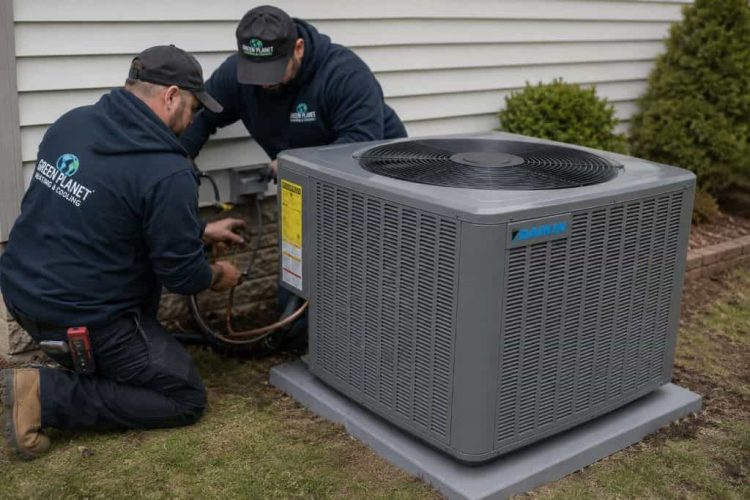
For homeowners, fast help matters, but so does the kind of help they receive. A rushed fix that ignores sizing, charging, or duct condition can keep a system limping along while the real problem continues underneath. Heat pumps reward careful work. They can cool efficiently in summer, and modern air-source heat pumps are recognized as an energy-efficient alternative to traditional air conditioners and furnaces. That makes them appealing equipment for this climate, but only when the diagnosis and installation are handled correctly.
Why quick response matters with heat pumps
A failed heat pump in summer is not a minor inconvenience. During a mild week, you may be able to open windows in the evening and get by for a bit. During a hot run, especially one of those August stretches with repeated 90-plus days, indoor heat builds quickly. Homes hold heat differently, of course. A shaded house may drift upward slowly. A sunny second floor can become uncomfortable much faster. The point is the same either way, delay has a cost.
This is where emergency HVAC calls come into the picture. The phrase gets overused sometimes, but there are situations where emergency HVAC services make perfect sense. If the system has stopped cooling during a heat event, if indoor temperatures are climbing rapidly, or if the equipment is cycling oddly and appears close to a complete shutdown, waiting several days is not always practical. Fast service can prevent a small electrical or refrigerant issue from turning into a bigger equipment failure, and it can keep a family from spending multiple nights in a home that simply will not cool affordable HVAC contractor down.
At the same time, speed should not mean guesswork. One of the more expensive patterns homeowners fall into is paying for repeated quick fixes on a system that has deeper problems. A capacitor gets changed, then a contactor, then refrigerant is added, then airflow is discussed, then another part fails. Each step feels justified in the moment, but the total can climb quickly if nobody is stepping back to ask whether the unit is correctly sized, whether the installation was done properly, or whether the equipment is simply at the end of a reasonable service life.
Heat pumps are not niche equipment anymore
There is still a lingering misconception that heat pumps are mainly for heating or that they are somehow a specialty product. That is outdated thinking. Modern air-source heat pumps can cool homes efficiently in summer, and they are increasingly considered a practical replacement for conventional central air in many homes. In fact, a central air conditioner can often be replaced with a heat pump for a modest additional cost, with the added possibility of eliminating or downsizing a furnace.
That matters for South Pasadena homeowners because it changes the conversation during a breakdown. If an older AC or mixed heating and cooling setup is failing, the question is not only, “How do I get HVAC contractor cold air back tonight?” The better question is, “If I have to put serious money into this system, am I repairing the right equipment, or is this the moment to consider a heat pump replacement that serves the house better?”
There is no single answer that fits every home. Some systems still deserve repair. Others are telling you, pretty clearly, that replacement is the smarter path. Experience teaches that this decision usually becomes easier when you stop looking at one symptom and start looking at the pattern.
The trouble signs that should not be ignored
ENERGY STAR points to several signs that equipment may be nearing replacement time. Those signs are familiar to anyone who has spent time around aging HVAC systems, and they are worth taking seriously because they rarely improve on their own.
- Equipment older than 10 years
- Frequent repairs
- Rising energy bills
- Rooms that stay too hot or too cold
A single repair on an older system is not unusual. A second repair in the same season is more revealing. Uneven comfort is another clue that people tend to normalize for too long. Homeowners will say things like, “The back bedroom has always been warmer,” or, “Upstairs is just impossible in August.” Sometimes that is partly true. Homes have hot spots. But persistent comfort imbalance can also point to duct leakage, sizing problems, or a system that no longer delivers what it should.
Rising utility bills are equally important, though they can be harder to judge from memory. People often notice the increase only after several summers, once the totals start to sting. If a heat pump or AC has to run longer to achieve the same result, that usually means something has changed. It could be wear, airflow restriction, refrigerant issues, duct losses, or a mismatch between equipment and the home’s actual load. Whatever the cause, higher cost paired with worse comfort is a strong signal that the system deserves a deeper review.
Good emergency service is calm, not flashy
When homeowners call for emergency HVAC services, they often expect a race against the clock. That urgency is understandable, but the best service calls usually have a steadier rhythm. A good technician moves quickly without skipping the basics. They listen to what the system has been doing, note whether the problem appeared suddenly or has been building, and look for clues that distinguish a simple failure from a symptom of a larger issue.
That distinction matters a lot with heat pumps. If the failure is straightforward and isolated, restoring cooling may be the right immediate answer. But if the system has a record of repeat breakdowns, poor summer performance, or unresolved comfort complaints, a fast restart is only half the job. A homeowner deserves to know whether the fix is likely to hold and whether putting more money into the existing setup makes financial sense.
This is also where honesty becomes valuable. Not every house needs a major system overhaul because of one bad day. On the other hand, not every old unit should be propped up one more time just because it can be. There is judgment involved. The best advice usually sounds measured: here is what failed, here is what it costs to repair, here is what the age and condition suggest, and here is why replacement may or may not be worth considering now.
Installation quality can make or break a heat pump
One of the least glamorous truths in HVAC is also one of the most important. Equipment quality matters, but installation quality matters just as much, sometimes more. The Department of Energy and ENERGY STAR both emphasize that oversized systems, improper charging, and leaky ducts can reduce efficiency, create comfort problems, and shorten equipment life.
Homeowners do not always hear that clearly enough. They may compare brand names and efficiency ratings, which is reasonable, but the system in the attic, closet, or yard is only as good as the work that went into selecting and installing it. An oversized system may cool too quickly and shut off too soon, a pattern known as short cycling. That can shorten equipment life and leave the home less comfortable because the system never settles into a healthy operating rhythm. Improper charging can increase energy use and raise the risk of system failure. Leaky ducts can quietly waste cooling before it ever reaches the rooms you are trying to keep comfortable.
I have seen homeowners blame “bad equipment” when the real issue was poor execution from the start. The unit looked impressive on the proposal, but nobody sized it properly. Or the refrigerant charge was off. Or the duct system was treated like an afterthought. Those are not minor details. They shape comfort, operating cost, noise, and reliability.
For South Pasadena homes, that matters even more because the local cooling season has enough truly hot days to expose every weakness. A system that seems fine during mild weather can unravel when it has to run through multiple 90-degree afternoons in a row.
Why sizing is not guesswork
Correct sizing is one of the clearest dividing lines between a system that performs well and one that disappoints for years. ENERGY STAR recommends correctly sized and matched equipment based on load calculations, along with a well-sealed duct system. That may sound technical, but the idea is simple. The home should get equipment matched to its cooling needs, not equipment chosen by rough habit, sales instinct, or a larger-is-better mindset.
Bigger is not automatically safer in HVAC. Homeowners often assume extra capacity means extra comfort, but oversizing can actually hurt performance. A unit that blasts the house cool in short bursts may cycle on and off too often, increasing wear and reducing the steady, controlled operation that good comfort depends on. It can also leave homeowners with the frustrating sense that the system technically works, yet the house never feels consistently right.
That is why replacement decisions should not be made in a hurry, even when the original call came in as an emergency. Fast help is essential when cooling is down. Smart planning is essential if the long-term answer may be a new heat pump.
Repair now or replace now?
This is the fork in the road that catches many families off guard. They call because the house is hot and want relief as soon as possible. Then they learn the existing system is older, has a repair history, or shows signs that fit the standard replacement warnings. The next step is not always obvious.
A practical way to think about it is to separate the immediate need from the long-term investment. The immediate need is restoring comfort. The long-term investment is deciding where your next few thousand dollars should go. Those are related questions, but they are not identical.
If the system is not that old, has been reliable, and the problem is isolated, repair may be the sensible move. If the system is older than 10 years, has needed frequent repairs, and still leaves some rooms too hot or too cold, replacement deserves a serious look. Add rising energy bills to that picture, and the case becomes stronger. Properly installed high-efficiency systems can save up to 20% on heating and cooling costs, which means the replacement conversation is not just about avoiding repairs. It is also about performance and operating cost over time.
There is a human side to this decision too. Most homeowners do not want to replace equipment during a breakdown. They want their evening back. They want the house cool again. That is understandable. But there are moments when the painful timing is actually clarifying. If the old system has been warning you for two summers, one emergency call may simply be the point where the math stops favoring one more repair.
What homeowners can do before help arrives
A complete DIY approach is not the answer to a failed heat pump, and homeowners should not guess at technical fixes. Still, a few calm steps can make the situation easier while waiting for service and may help the technician understand what happened.
- Set the thermostat to cooling and lower the setpoint a few degrees to confirm there is a call for cooling
- Check whether the system is running at all or if it is silent
- Notice whether some rooms are warmer than others or whether no cooling is reaching the house
- Keep blinds or curtains closed on the sunniest windows to slow heat gain
- Write down when the problem started and whether the system had been short cycling, running constantly, or making unusual starts and stops
None of these steps replace professional diagnosis. They simply help reduce confusion. Even a brief description such as, “It ran all morning but stopped cooling after lunch,” or, “It has been turning on and off every few minutes for a week,” can point the service visit in a more useful direction.
Ducts deserve more attention than they usually get
Many comfort complaints that homeowners blame on the unit itself turn out to involve the duct system. The reason is straightforward. Even well-chosen equipment cannot deliver proper cooling if the air distribution side is compromised. DOE notes that leaky ducts reduce efficiency and can create comfort problems. ENERGY STAR also highlights the value of a well-sealed duct system.
This issue is easy to overlook during an urgent call because ducts are less visible than the outdoor equipment or the thermostat. But if a home has rooms that never seem to cool properly, or if one area gets chilly while another lags far behind, the duct system should be part of the conversation. So should matching. Correctly sized and matched equipment matters. A strong heat pump paired with weak duct delivery is like buying a better engine for a car with tire problems. You may improve one part of the experience while missing what still holds the whole system back.
The case for doing it right the first time
Homeowners often ask what actually separates a good outcome from a disappointing one. The answer is rarely dramatic. It is not one magic feature or one flashy spec sheet. It is a cluster of sound decisions made at the right moments.
The equipment should be properly sized. The installation should be done carefully. The refrigerant charge should be correct. The ducts should be well sealed. The system should be matched appropriately to the home. These basics are not exciting, but they are where comfort, efficiency, and longevity are won or lost.
That is why a fast response should lead into a careful plan. Emergency HVAC service is important because families need relief when cooling goes down. But speed alone is not the full solution. A house in South Pasadena does not just need cold air restored for one afternoon. It needs a system that can handle repeated hot days in July and August without wasting energy, short cycling itself into an early grave, or leaving bedrooms stuffy while the thermostat claims everything is fine.
Looking beyond the immediate breakdown
A heat pump problem often starts with a very simple complaint: the house is hot. Fair enough. But once that problem appears, it opens up a bigger opportunity to assess whether the system is serving the home the way it should.
For some homeowners, the answer will be yes. The repair is sensible, the equipment still has life left, and the issue is contained. For others, the breakdown is the final piece of evidence in a pattern that already included age, comfort imbalance, and higher bills. In that case, moving to a modern heat pump may be the smarter call, especially since these systems can cool efficiently in summer and may provide a practical alternative to older combinations of AC and furnace equipment.
The real value in fast heat pump help is not only the speed of arrival. It is the quality of the judgment that follows. South Pasadena homes need cooling systems that can handle genuine summer heat. Homeowners need clear guidance, not pressure. And when a decision involves repair versus replacement, the best path is usually the one grounded in the system’s age, repair history, comfort performance, operating cost, and the quality of the installation itself.
That kind of help is fast in the way that matters most. It restores comfort without losing sight of the bigger picture.